In science, when you’ve got a story that’s ready for publication, you have to decide where to send it – and the choice is far from inconsequential. Continue reading

In science, when you’ve got a story that’s ready for publication, you have to decide where to send it – and the choice is far from inconsequential. Continue reading

It’s a scenario that’s all-too-familiar to many scientists. Your career – be it in academia, industry, publishing, communication, or something else – is gradually progressing when you and your partner decide to start a family.
But what do you do once the new addition has arrived? And what impact will the arrangement have on your career, and that of your partner? TIR has collected some accounts from science parents around the world:
![]()
Last week, Total Internal Reflection clocked its 1,000th visitor – much, much faster than I envisaged when starting this around 6 months ago.
A big thanks to everyone who’s been following the blog, don’t forget to click on the “follow” tab to get notifications of future postings, and keep in touch!
Comments, corrections, and suggestions for future postings are all very welcome – it’s about starting a conversation rather than having the last word. Cheers, B.

Science counts as one of the very few truly international careers out there – not simply being in an office somewhere else in the world, but actually working alongside people of all nationalities, races, and creeds. The current lingua franca for publications and conferences may be English, but the average scientific institute or department is a Babel of different tongues depending on who’s talking to who and when.
What do you get from going abroad? Some opportunities are the same as would come from relocation within your own country – a chance to learn new techniques, and bring something new to the group that you join. In that sense then, if you originate from a research powerhouse like the USA, Germany, UK, or France then in theory there’s little reason to cross the border and seek your fortune somewhere else.
Or is there? Continue reading

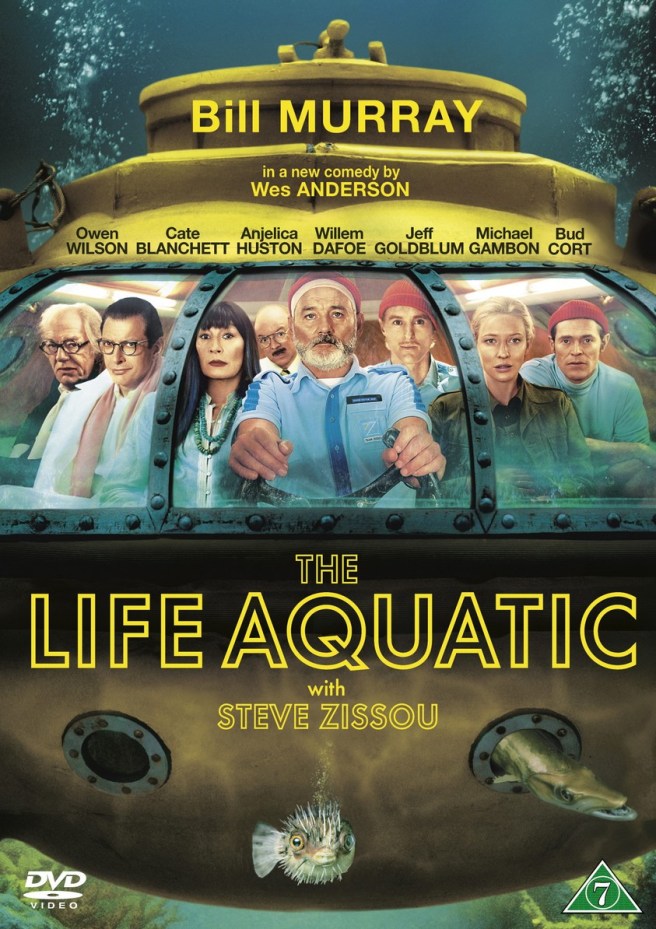
Total Internal Reflection is a big fan of the films of Wes Anderson. Whether it’s the European Gothic of The Grand Budapest Hotel, the quixotic romance of Moonrise Kingdom, or the chamber/hotel drama of The Royal Tenenbaums, Anderson’s work has established him as an original and highly distinctive voice in the world of cinema.
But for scientists, there’s one of his films that should stand out amongst all others – The Life Aquatic with Steve Zissou. If ever a non-scientist wished to understand the vagaries and vicissitudes of the academic life, they could do a lot worse than sitting down to digest this film. Continue reading

If you’re acquainted with the scientific literature, whether it’s papers, grants, or press releases, chances are that the following word formulae will be very familiar: Continue reading

Whether you’re working in the world of commerce, sports, science, or just about any sphere of human endeavour, chances are that if you progress far enough you’ll be asked to take responsibility for leading a team. But to do so successfully – in other words, to get the best out of people – is far from easy, or straightforward. Continue reading

It’s one of the trickiest conundrums in the whole research enterprise – should you fund people, or projects? Ernst Gombrich opined in his History of Art that “There really is no such thing as art. There are only artists”, but when it comes to research money, where should it be directed – to the science, or the scientists? Continue reading

Insects get to undergo puberty in private, cocooned within a chrysalis. Humans have to do it in public. The biological form is difficult enough, but undergoing one’s scientific puberty is often pretty traumatic too – for both student and supervisor. Continue reading

I was riding a train back from Munich recently and a headline on a free magazine caught my eye. “Einer für Alles”, proclaimed the headline over a picture of youngish German theatre director Florian David Fitz, “Er schauspielert, schreibt, und fuhrt Regie”. (He acts, writes, and directs)
It’s clearly a broad portfolio for one of our cousins in the Arts, and one that few manage to replicate. Yet acting, writing, and directing are essentially different facets of the same process – the writer constructs a part, the performer brings it to life, and the director guides and oversees the process. Shifting between these roles, while undeniably challenging, is primarily a shift in perspective and responsibility (are you taking charge of one character, or many?).
Conversely, a scientist must be an able experimentalist, a good writer, a good presenter, a good teacher, and a good leader and mentor. And these activities have far less in common than writing/acting/directing for theatre – the scientific mindset must be channelled into a wide range of academic conduits, few of which come naturally. Continue reading