
The most important equilibrium in research isn’t chemical, it’s psychological. It’s the one that governs the oscillation between confidence and doubt. Continue reading

The most important equilibrium in research isn’t chemical, it’s psychological. It’s the one that governs the oscillation between confidence and doubt. Continue reading

Attention all postdocs in Austria!
TIR will be giving the keynote presentation at the very first Postdoc Forum on October 15th, 2016. Full details, as well as the link for registration, can be found HERE (also on the Facebook page HERE).
The forum is being organised by the Vienna Postdoc Think Tank, a new collective aimed at discussing and improving postdoc career options. So if you’re based in Austria and interested in being part of the dialogue about how science should be structured, come along! (it’s free)

If you’re running a lab, will you get more from people if you praise their successes or criticise their failures? Continue reading
TIR will be away for the next couple of weeks, but in the meantime here’s a selection of books to keep you occupied on your summer getaways – a mixture of recent reads and old favourites.

Last month’s posting (“Sharing the load“) with stories of parents in science was one of TIR‘s most popular yet. Here are three four (updated September 1st) more accounts of parents juggling commitments.

Illustration created by Oliver Hoeller. Like it? Check out more of his work here: www.oliverhoeller.com

In science, when you’ve got a story that’s ready for publication, you have to decide where to send it – and the choice is far from inconsequential. Continue reading

It’s a scenario that’s all-too-familiar to many scientists. Your career – be it in academia, industry, publishing, communication, or something else – is gradually progressing when you and your partner decide to start a family.
But what do you do once the new addition has arrived? And what impact will the arrangement have on your career, and that of your partner? TIR has collected some accounts from science parents around the world:

Last week, Total Internal Reflection clocked its 1,000th visitor – much, much faster than I envisaged when starting this around 6 months ago.
A big thanks to everyone who’s been following the blog, don’t forget to click on the “follow” tab to get notifications of future postings, and keep in touch!
Comments, corrections, and suggestions for future postings are all very welcome – it’s about starting a conversation rather than having the last word. Cheers, B.

Science counts as one of the very few truly international careers out there – not simply being in an office somewhere else in the world, but actually working alongside people of all nationalities, races, and creeds. The current lingua franca for publications and conferences may be English, but the average scientific institute or department is a Babel of different tongues depending on who’s talking to who and when.
What do you get from going abroad? Some opportunities are the same as would come from relocation within your own country – a chance to learn new techniques, and bring something new to the group that you join. In that sense then, if you originate from a research powerhouse like the USA, Germany, UK, or France then in theory there’s little reason to cross the border and seek your fortune somewhere else.
Or is there? Continue reading
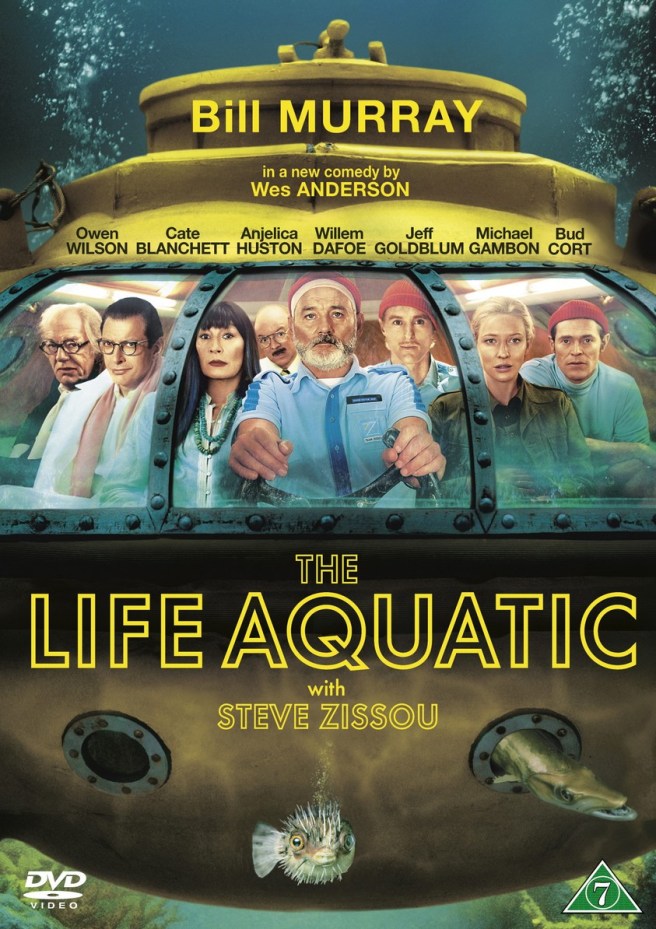
Total Internal Reflection is a big fan of the films of Wes Anderson. Whether it’s the European Gothic of The Grand Budapest Hotel, the quixotic romance of Moonrise Kingdom, or the chamber/hotel drama of The Royal Tenenbaums, Anderson’s work has established him as an original and highly distinctive voice in the world of cinema.
But for scientists, there’s one of his films that should stand out amongst all others – The Life Aquatic with Steve Zissou. If ever a non-scientist wished to understand the vagaries and vicissitudes of the academic life, they could do a lot worse than sitting down to digest this film. Continue reading
 Total Internal Reflection