
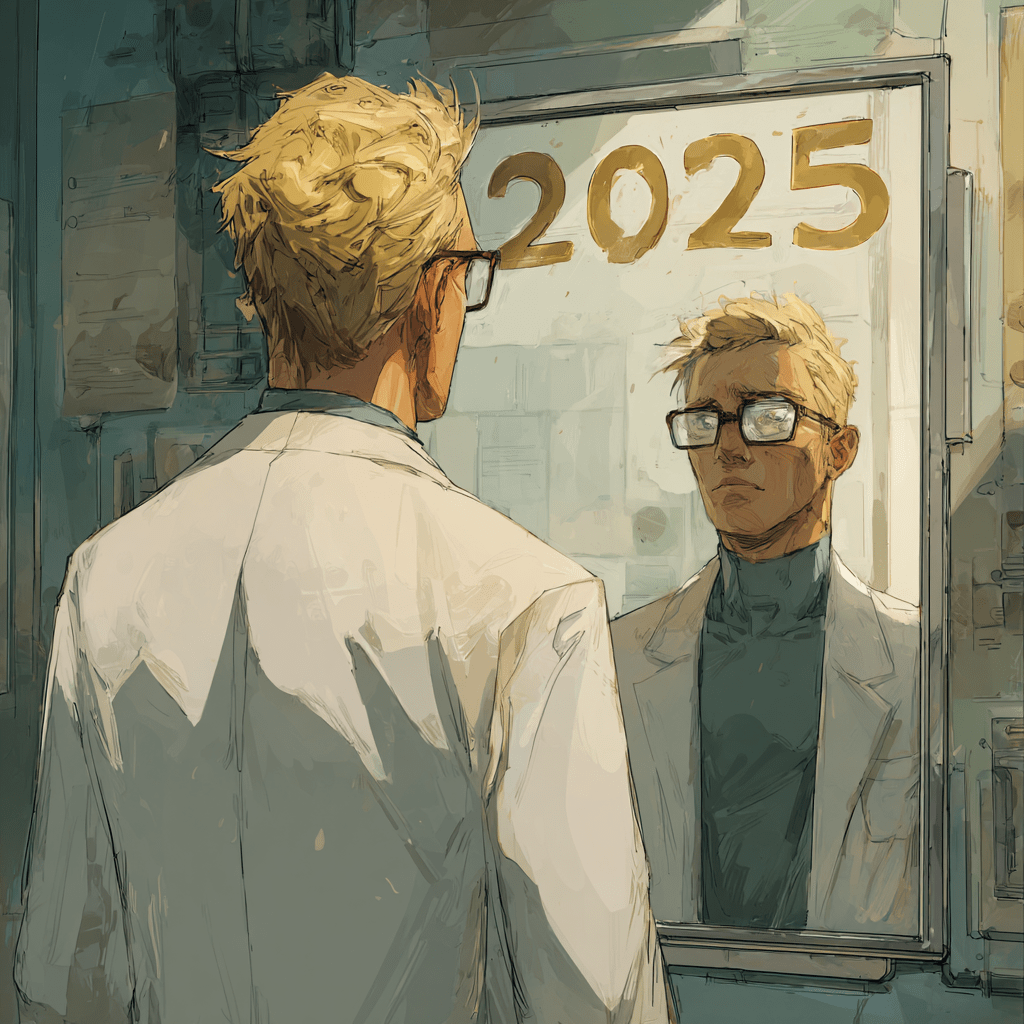
A look back at TIR’s 10th year of operations.
The year in retrospect
2026, incredibly, marked TIR’s 10th birthday! The blog began in 2016 when the start of parenthood meant I could no longer continue doing amateur theatre, and I needed to find something to scratch the creative itch in some way.
It remains one of the greatest privileges of my life to have discovered that these funny thought bubbles that continually pop into my head turn out to be of interest to a lot of you too. That said, it’s clear that there’s a bit of a rebuilding job ahead in 2026.
Traffic and Twitter
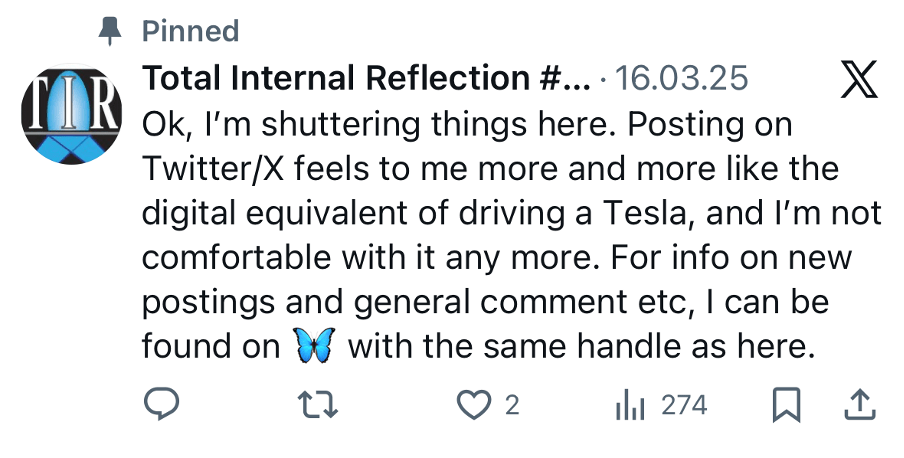
Like many other writers, content creators, and even mainstream news outlets I witnessed a huge drop in visitor traffic in 2025. Twitter and my increasing engagement with the ScienceTwitter community was integral to the blog’s growing reach (particularly 2020-2023) but that began to decline in 2023 after Elon Musk’s takeover, accelerated in 2024 and flatlined in 2025.
Besides the scattering of the ScienceTwitter community to the winds, another contributing factor (I hope!) was my decision to shutter my Twitter account: I stopped posting there in Mid-March. It’s a decision I haven’t regretted for a moment. To all of you who still have Twitter accounts, come to BlueSky! I’m also still using Mastodon and have begun to see more and more traffic coming via cross-postings to my LinkedIn page, but BlueSky still feels like TIR’s natural habitat.
Readers new and old
Of course, another contributing factor to the drop in traffic will have been the effect of genAI summaries and their inevitable reduction in the likelihood of people clicking on original links. The bread and butter of the blog’s traffic for many years has been its “How to…” postings aimed at improving young scientists’ soft skills and these are the most vulnerable to AI summaries – one of the strangest experiences this year came when I Googled one of my own HowTo postings at work when I needed to remind myself of something, only to find myself being presented with an AI summary of my own writing.
In all then, that means TIR is starting over in some ways, and that means I need YOU more than ever. A huge, huge thanks to all of you who have been reading, liking, and sharing the content over the course of the past year – it means a lot! Work+parenting still imposes a huge drain on my time, and I’d rather spend it writing new postings than aggressively promoting older ones.
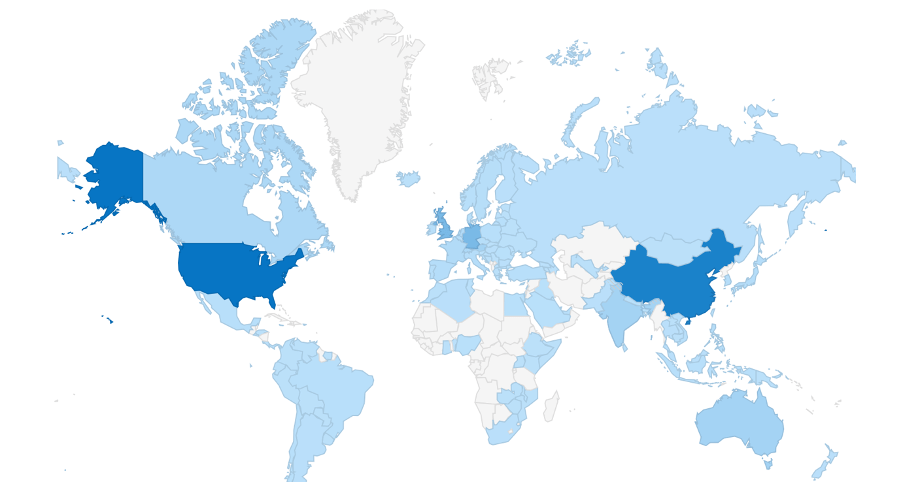
Interestingly, 2025’s numbers were greatly improved by a remarkable surge in traffic from China in November/December which led to it ending the year only a few hundred views behind the USA. The bulk of traffic has always come from the USA, UK, and Germany (perhaps not coincidentally, all countries that I’ve lived in) but there’s a sense that there are more and more readers coming from Central & South America, Africa, the Middle East, and Asia. It’s great to see TIR reaching new readers and it would be wonderful if this continued in 2026.
Turning whistleblower
Arguably the most significant event of 2025 is actually yet to appear in TIR. In June I turned whistleblower to notify my former employers at the University of Würzburg of the unprofessional behaviour (bullying and intimidation) of one of my former colleagues at the Department of Cell & Developmental Biology (Zoologie I). This individual had threatened to accuse me of scientific misconduct unless I did as they wanted in an authorship dispute, and said that according to Data Protection law I had to keep that threat a secret.
Whistleblower complaints generally don’t have a great success rate in academia, but in this case the response was exemplary – the University Ombudswoman supported my complaint, provided very effective mediation, and within a few weeks I received a written letter of apology and a pledge from the person concerned to put up posters in the department to publicise the Ombudspersons’ office. The story is typical of the abuses of power that bedevil academia, but this is one instance at least where the complaint system worked as it should – thank you, UniWue!
MedComms and outreach
My move into Medical Communications (MedComms) feels more and more like one of the best decisions I’ve ever made, and the opportunity to spend the second half of my working life in the private sector (having spent the first half in the public sector/academia) sets things up for a fascinating and enlightening contrast between the two worlds. It is a daily pleasure to apply the skills I acquired in academia to the publication and dissemination of industry-funded biomedical research, with real-world relevance baked into absolutely everything I do.
I get a huge kick talking about it too! I’ve long been of the opinion that society needs to train as many PhDs as it can, but that has to be accompanied with better signposting of the ways out of academia – we don’t want “Science & Society”, we want “Scientists in Society!” It’s been an inspiring and humbling and frankly embarrassing insight for me to learn how nice life is doing science outside the currently suffocating overfill of academia, and I plan on using TIR to help as many other scientists as possible get their career bearings.
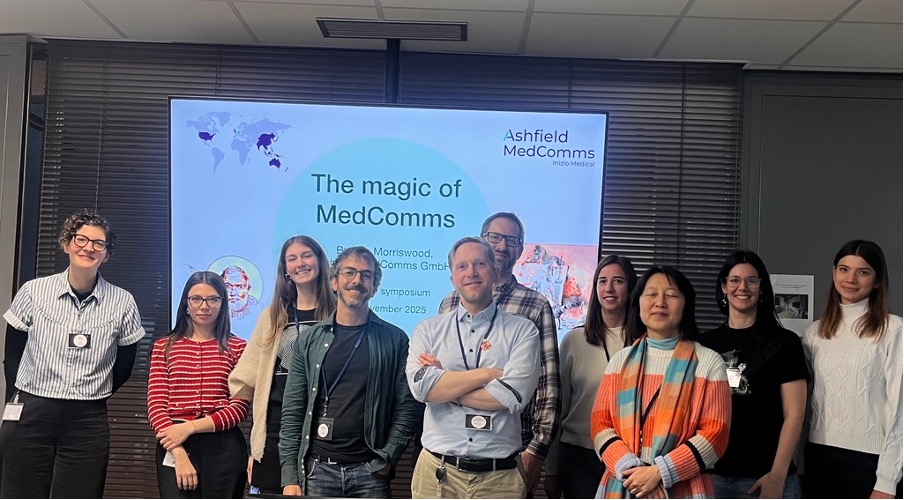
An outreach highlight in 2025 was speaking at the Vienna Biocenter PhD & Postdoc symposium, where I gave a workshop on MedComms as a career.
Resolutions for 2026:
Soooo, what’s in store for 2026? Well, I plan on maintaining a monthly posting frequency (at least), and manage more postings than 2025. This is still a long way short of earlier posting frequency, but it’s a start. I still, incredibly, have some unfinished academic research business to attend to and it would be great if that story can be brought to a conclusion. I also plan on keeping up with the outreach work, so if you’re organising a careers symposium and on the lookout for a speaker, feel free to leave a comment here or DM me on BlueSky. And once again, a big thanks to all of you out there for taking the time to read.
You keep reading, I’ll keep reflecting,
Brooke Morriswood, January 2026
TIR’s top 5 postings of 2025:
Seeing triple (a short guide to experiment reproducibility)
The devil in the details (a short guide to writing figure legends)
Credit where credit’s due (a short guide to authorships in scientific papers)
Great scientists, great moustaches IV (a Movember posting)
Science and narcissism (an interview with Bruno Lemaitre)
Original illustrations generated using Midjourney.
 Total Internal Reflection
Very beautiful and encouraging article
LikeLiked by 1 person