
Stress is a near-constant feature of life in academia, but that doesn’t mean it’s automatically a bad thing.

Stress is a near-constant feature of life in academia, but that doesn’t mean it’s automatically a bad thing.

Earlier this week, TIR’s most popular post – “The cell biologist’s guide to fine dining” – went past 10,000 views. A big thanks to everyone out there for reading it, commenting on it, sharing it, and in one outstanding case, for taking 5 minutes out of a Gordon Conference presentation to read excerpts from it (!). Much appreciated.
There’s lots more to come from us here at TIR, so please keep coming back, sign up for e-mail alerts (at the top of the page), and put the word out to your friends and colleagues if you think they’d be interested in what we’re doing here. We’ll continue reflecting on things…
Cheers,
Brooke & Oliver

It’s widely accepted that there is a logjam in the academic career stream. There are too many postdocs for too few faculty positions. The average age for achieving full independence is rising, and the postdoctoral period has gone from being a second apprenticeship to an indefinite stay in limbo. One proposed solution is contraceptive – that we should train fewer PhDs. It’s wrong.
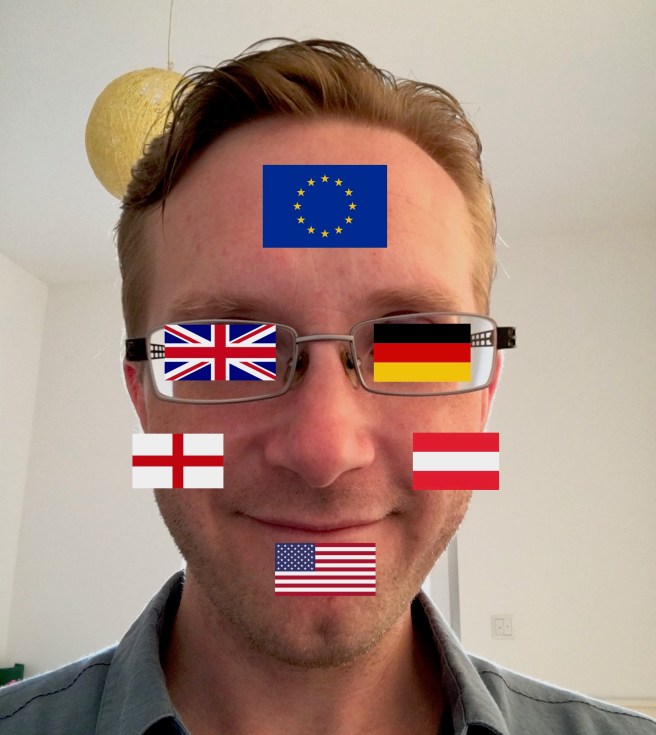
Moving is part of a modern scientific career. Nor is it uncommon to have a partner of a different nationality, to live and work abroad for years at a time, and to use a second language (often English) as a working language.
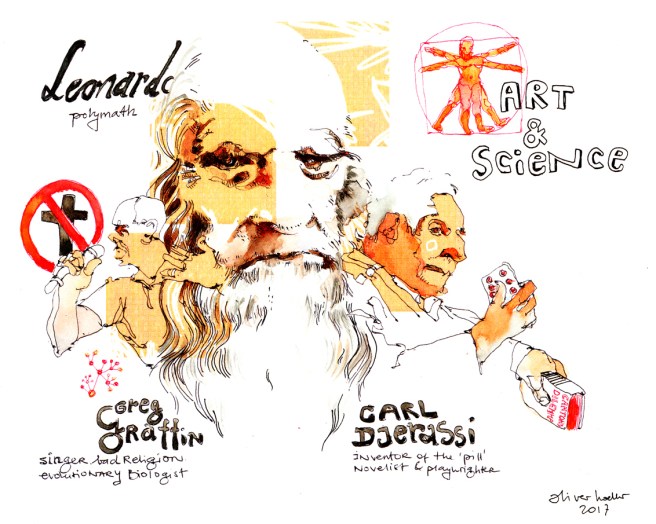
Science and the arts are often portrayed as polar opposites, but the truth is that they’re far closer than many of their practitioners even realise. Continue reading

We have a guest posting this week from Prof. Tim Skern of the Max F. Perutz Laboratories in Vienna, Austria. As well as providing a counterpart to TIR‘s earlier post on how to choose a PhD position, Tim also offers a number of recommendations for how to handle yourself in PhD interviews.

Science is big on collaboration. With such a variety of knowledge and expertise it’s crucial to get advice from, and work alongside, people who are specialists in a particular area. But while that sounds great on paper, it’s surprisingly hard to achieve in practice. Collaborations are actually relationships in a real sense, and like real relationships, they’re very difficult to get right. In fact, many scientific collaborations bear more resemblance to an arranged marriage than a love match.

TIR began in 2016. We’ve had milestone posts to mark our 1,000th and 2,000th visitors, and at the end of May we welcomed our 4,000th visitor.
Then this happened, and we can now greet our 5,000th, 6,000th, 7,000th, 8,000th, 9,000th, and indeed our 10,000th visitors. So it’s not one but two doublings we’re marking today, and we’re well on our way to our next exponential target of 16,000.
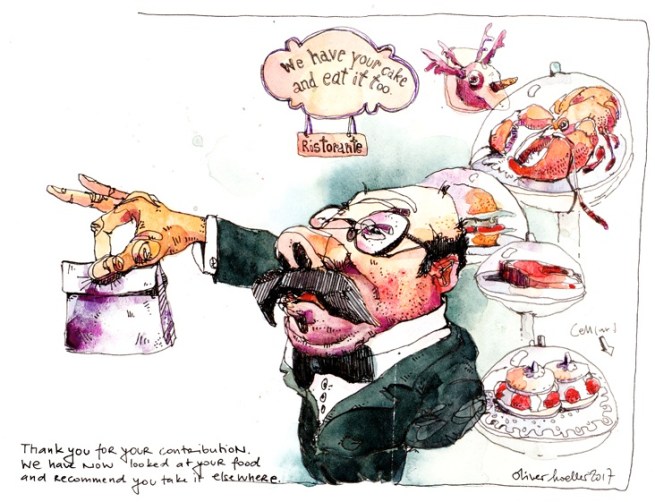
A lighthearted post this week. What would the publishing landscape be like, if journals were restaurants instead of publications? TIR offers its own, definitely not Michelin-starred, guide…

One of the most thought-provoking economics reads of the last few years, Daron Acemoglu and James Robinson’s “Why Nations Fail“, basically picks up where Jared Diamond’s “Guns, Germs, and Steel” left off. But what’s the link to mentoring?
 Total Internal Reflection