
What links the 1924 Everest expedition with the 2024 Nobel Prizes?
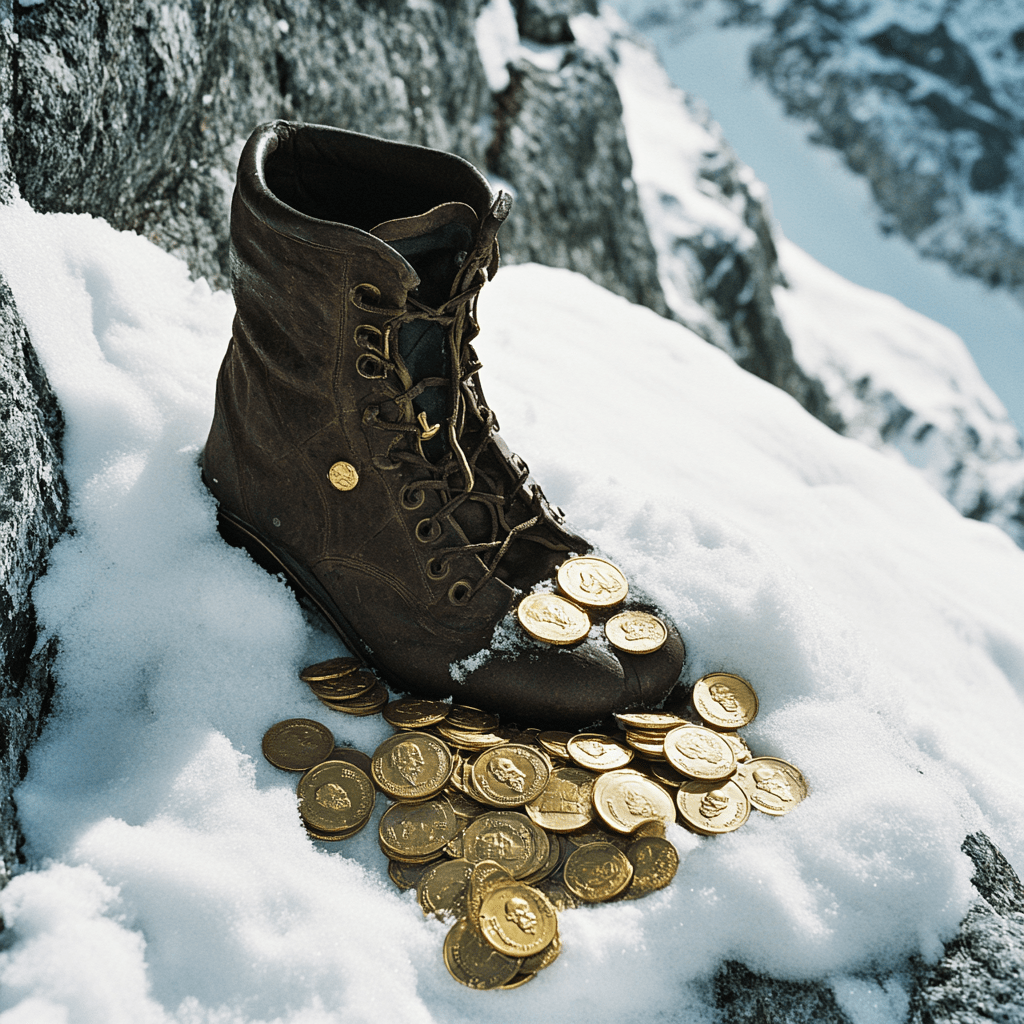
The recent discovery of Sandy Irvine’s foot on the slopes of Mount Everest, exactly 100 years after the legendary and ill-fated 1924 expedition, marks just the latest twist in one of the most enduring mysteries in mountaineering – did Irvine and George Mallory reach the summit of Everest nearly 30 years before it was officially scaled by Edmund Hillary and Tenzing Norgay in 1953?
It’s an irresistible puzzle, and one perhaps best told in Wade Davis’ mesmerising “Into the Silence” which frames the 1924 expeditions against the backdrop of the First World War. The book, like many dealing with that era, is populated by the most extraordinary cast of characters – polymaths and geniuses and physical prodigies. Soldiers, statesmen, photographers, painters, inventors, filmmakers, engineers, physicians, naturalists, geologists, and more are all represented, all engaged in this mad and enthralling pursuit.
The remarkable characters that people these tales of Empire, while exhibiting a dizzying variety of abilities and interests, also have a lot in common: almost without exception, they’re white men, with good educations, often monied, and ubiquitously endowed with the myriad social connections that come as a birthright of their social class.
Such men are often invoked as the heroes of a lost Golden Age, great figures striding a narrow world that could scarcely contain their ambition, brilliance, and courage. This nostalgia about Empire, a trope of current rightwing populism, is invariably and whimsically depicted without regard to the negative effects of colonialism, the entrenched racism of the system, and the extractive socioeconomic machinery that enabled it. It’s like watching “Bridgerton” or “Pride and Prejudice” and never having to wonder or worry about who it is that actually changes the chamber pots and unblock the drains of all these glamorous people with their big houses and big clothes, or who ultimately pays for it all.
But amidst the ongoing and uncomfortable reckoning with Britain’s colonial past, there’s perhaps a positive angle that can be used when considering the lives and achievements of these undoubtedly remarkable men. Born, through no fault of their own and to their lifelong good fortune, into the race, class, and socioeconomic stratum that sat atop a vast pyramid of exploitation they were free to explore the limits of their physical and intellectual capabilities, and developed accordingly.
How many people – men and women, from all backgrounds – would flourish if they were given similar opportunities? How often would we see geniuses and visionaries emerging if only we could ensure that there was equality of opportunity to all children born in a society?
Science found itself grappling with a similar narrative this October, when yet again, all of the science Nobel prizes were awarded to men (though at least this time, not exclusively white men). The Nobel committee then committed one of the most jarringly tone-deaf bloopers of recent years by tweeting its congratulations to Physiology & Medicine co-laureate Victor Ambros accompanied by a picture of him and his wife Rosalind Lee, while noting that Lee was “also the first author on the 1993 “Cell” paper cited by the Nobel Committee”; internet sleuths wasted no time in pointing out that Lee in fact appears on almost every paper from the group.

The exact nature and extent of Lee’s contributions to the Nobel prize-winning research portfolio don’t need to be dissected; what’s important is that the tweet betrays the kind of systematic bias that bedevils the research community. Here’s a remarkable male scientist and by the way, here he is with the non-male scientist who’s been his research partner for decades and appeared in virtually every publication that led to the prize.
The lazy defence of this tediously repetitive pattern is to point out that all laureates have made significant contributions, that these winners are the senior authors and presiding geniuses of their research groups (the intellectual contributions of their many students and postdocs, not to mention the exquisite practical skills often required to execute the experiments, are conveniently omitted) and that in time, the awards will surely diversify their representation. It’s exactly the same argument that’s trotted out to defend male-dominated faculty gender ratios, which have been inching towards parity at about the same rate that Everest has been inching skywards.
But in fact, this equality of opportunity – even in science, which likes to think of itself as one of the more meritocratic careers out there – is in scant evidence. The elite education, financial resources, and social connections that bequeathed so much to the 1924 Everest climbers are mirrored to a troubling extent in the attributes enjoyed by many of science’s key opinion leaders. Very few who succeed are willing or open-minded enough to acknowledge all these benefits which have been baked into their CVs almost from the beginning, or the role of luck.
“They don’t make ‘em how they used to” is the wistful conclusion to tales of Mallory, Irving, and their ilk but actually, they make ‘em like that all the time. It’s just a question of whether they get the opportunity to reach their full potential.
Perhaps Everest itself offers hope. One hundred years after that ill-fated expedition, and many decades after the first successful ascent, Everest is now routinely scaled by climbers from all over the world. The early expeditions may have been uniquely the preserve of white men, but the thousands of modern climbers represent a kaleidoscope of nations from every corner of the Earth. If that’s not progress, I don’t know what is.
 Total Internal Reflection