
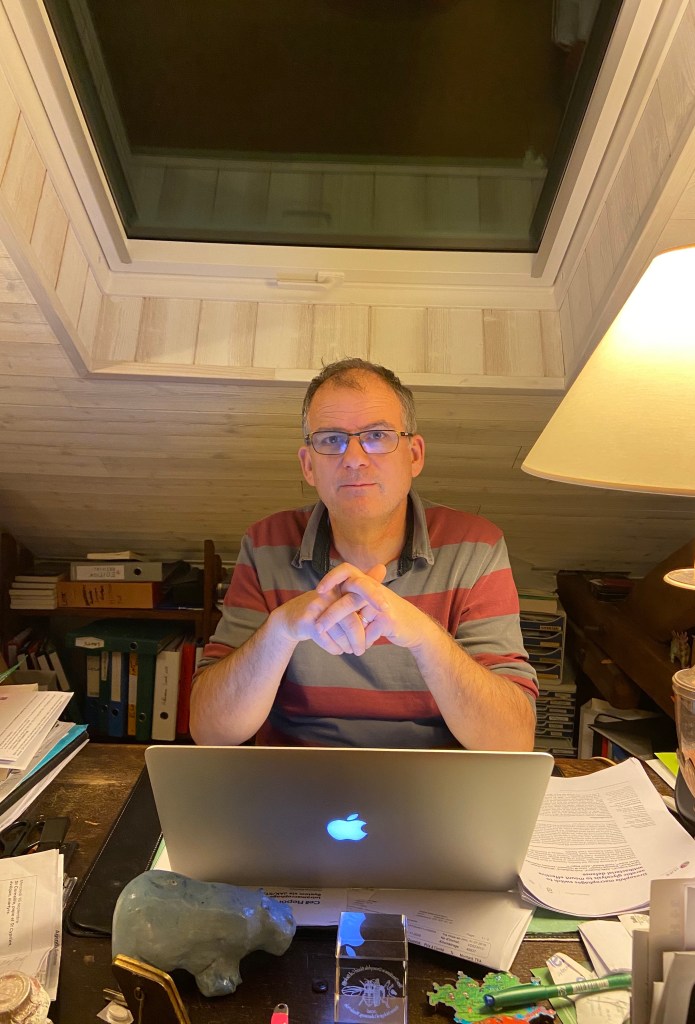
TIR talks to immunologist Bruno Lemaitre, a key figure in Toll research, about science, academics, narcissism and narcissists. He is an observer and commentator on the dark side of success in scientific research.
Bruno Lemaitre made his name by demonstrating the role of the Toll pathway in the Drosophila immune response to fungal infections. This finding and others precipitated the recognition of mammalian Toll-like receptors as pattern recognition receptors in the innate immune response, something that ultimately brought a Nobel prize (2011) for his postdoctoral mentor Jules Hoffmann.
Hoffmann’s involvement in this research was rather distant, and his success in propagating his own version of the story (largely at the expense of Lemaitre’s personal contribution), caused a breakdown in relations between the two men.
While Bruno’s current research continues to deal with the operation of the Drosophila immune system, since 2016 he has also become a noted commentator on the prevalence and impact of narcissism in science.
Q: What was it that kindled your interest in narcissism in science?
I’ve always been interested in the way we do science, the sociology of science – and when I started my career in France, I was not always entirely convinced by the scientists themselves. Many were not looking for truth and impartiality. A lot were involved in politics, some gave positions to friends, even to girlfriends. I was always fascinated by that in a certain way, the human side of the science enterprise.
And then there was the discovery of Toll-like receptors, a complex process that involved different research fields. This event, and the course that recognition for this event took, not only showed me how we are recognised in the scientific community, but also introduced me to other medically important research areas that are more competitive, such as immunology. Several groups were involved in this discovery, at least 6-8 people – who all deserved acknowledgement – but the prize went to the most dominant people in the field, and this was very frustrating to experience.
I think this affected my attitude – you do a certain amount of work, and then you realise that the credit goes to the people who communicate it more. But this is not an isolated case, in fact this happens quite frequently in science (see the book ‘Experiment Eleven: Dark Secrets Behind the Discovery of a Wonder Drug’). I was encouraged by a colleague, Peter Lawrence, to express this in a blog.
At that time, I was also very influenced by the scientist-philosopher Michael Polanyi and the idea of tacit knowledge which began to reveal the human side of science. Noticing some of the issues of current science, I came across the literature on personality, particularly the personality trait of narcissism that has been extensively studied in the USA. Reading about narcissism opened my eyes to success in science. Some people I knew – some are among the most well-known scientists – were described there. Thus, I started to read a lot on this topic and wanted to share this information with other scientists. I think this is important in order to better understand how science, just like all other communities, works, and to find our place in this ecosystem.
Reading the description of the grandiose narcissist – the charm, the big office, and the trophy-partner – I started to recognise the narcissistic characteristics in people around me (probably because of my personal experience with the 2011 Nobel prize, which could have increased my sensitivity). Science has become more competitive, and I realised that a lot of the people who were successful in science have the ability to oversell themselves, and a certain kind of egoism.
This personality trait has been quite well-characterised in America, with multiple very interesting studies. I was interested in revisiting the scientific ecosystem keeping this new realisation in mind.
In meetings, when you encounter other scientists, you often talk about people, and not about science, and you talk about the dominant people that are the most visible.
In addition, we all know people, who have been burned because the competition is very tough, and people at the bottom sometimes get eliminated. I know very sad stories of naïve students who left science disappointed. All this prompted me to read more about personality.
So all that made me feel that this lens is a very interesting way to look at science. It’s worth noting that some American psychologists, who have analysed changes to society at large, suggest that narcissism is on the rise or at least that some key societal issues are linked to narcissism. You can see this also in science by the emphasis on communication, and the fact that short-term impact is often more valued than long-term contribution.
For experts, narcissism is a personality trait with two forms: vulnerable and grandiose. Sometimes it can be very negative, but there are some aspects that can be positive for science and creativity in general. It can fuel passion, which is a key element to succeed in science. We should not forget that personalities come with trade-offs between positive and negative sides.
Q: The presence of dominant and domineering personalities in science is not news, but why do you think it’s helpful to view these people primarily as narcissists?
Personality psychology provides interesting insights to understand how we climb the ladder of success. It’s an approach that has already been applied to politicians and to other fields – I just decided to apply it to science.
Science now is so competitive compared to what it was. Some scientists, often high in narcissism, have better ability to network, to take advantage of the system, often at the expense of the community.
Experts recognise that narcissists are better in short-term interactions, and you may realise that success in science relies on a lot on short term interactions such as passing the editorial bar of top journals or succeeding at job interviews. The self-serving bias, which often relates the inflated self, allows them to appear as the main contributor of a study with many contributors.
The problem is that some behaviours associated with extreme forms of narcissism erode the trust in science. One response, which is far from optimal, is to increase regulations, leading to higher bureaucratisation of universities. It’s harder to maintain a community spirit in that environment though. Thus, when one or two professors do not respect the rules, we need to implement complex regulations that affect all of us. Those professors are often protected due to their ability to communicate with the external world of science such as politicians, funders…They bring visibility to their university.
All in all, we should not forget that they are many good people out there, which are often less visible. Research, like many other institutions, can be affected by people who behave selfishly, but usually, the community spirit allows us to protect science to some extent.
Q: Have you received any backlash from the scientific community for your writings on narcissism?
Not so much…people often agree. One person criticised me for putting a bit of darkness on science. They think that science is so great that it’s wrong to criticise it. I think that scientists should favour truth over protecting the institution. Thus, this critique of science is positive.
In addition, the public is not too naïve, and they know that some scientists are problematic, including the ‘greatest’ ones. But overall, we should not turn to the opposite and say that everything is rotten in science. This is not the case, and I do not think things were better in the past. Simply, we are less naïve today to see scientists as objective individuals, purely interested by knowledge. Scientists are humans, and recognition is important.
Q: You classify three main types of scientific narcissist – the mandarin, the operator, and the visionary. In what environments are young scientists most likely to encounter these types?
When you speak of personality, you must have a vocabulary and then you have to put some substance behind this. In the book, I describe stereotypes of narcissistic scientists to help to better understand this personality traits. But the reality is very complex. So, these three types are just examples.
In term of the description of narcissists, I was extremely interested by Thomas Söderqvist’s biography about the Nobel prize-winner Niels Jerne. Söderqvist did lots of interviews on Jerne, and halfway along he started to just hate him. This book is mostly about the narcissism of Niels Jerne, which probably played a big part in the fascination he created around himself. On a sad note, one of Jerne’s wives committed suicide. Jerne indulged in dreams of grandiosity, he didn’t like to go out socially with the lab, he could not even do experiments by himself.
So, I mentioned three types, three characters – I wanted to give them a kind of substance; I think it helps when you meet someone like that. Let’s consider just one facet of narcissism, the ability to oversell, which contributes to the power of attraction. This is useful to sell your work to the best journals – the story of today is a great discovery, but in fact this was just reasonable work. This characteristic (“overselling”) allows you to better understand the narcissistic character, for example, excessive susceptibility to criticism, which is often personalised as a direct attack.
This also explains why some narcissists are only interested in the big projects which are supposedly transformative. They often burn lots of money in overselling projects that keep the media occupied but ten years later are a disappointment, and ultimately forgotten. This explains why some narcissists – obsessed by the breakthrough insight, the big change, the addiction to top journals – get fed up by their science. They need to move to something else. These types of people create an agitation, some movement or wind around them that can exhaust their circle of acquaintances. This is often at the expense of more conscientious scientists.
As mentioned above, narcissists are good at short-term interactions. If you start to look at the long term, the benefits from narcissists are simply not there, but right now everything is short-term.
Q: Do you think young scientists are more vulnerable to narcissists now than they used to be?
I think the world of today is more competitive than it used to be. Change in fashion is fast, and you need to reinvent yourself to appear trendy. You always must sell yourself to get money. Even fields of research that used to encompass several generations of scientists can die in a very short time.
You also see how fashions become exaggerated. COVID was an extreme example, but still relevant. Microbiota and cancer research are important, but is it good that they attract all the financial support? And why? Because it’s sexy, because it looks good. There is a problem in distributing research money, leading to a rise in inequality between labs and fields, and a rush for short term goals.
This is not optimal for the scientific ecosystem that need long-term research and diversity The increase of inequality that we see is probably also linked to the rise of individuality, of narcissism.
The universities are also trying to get the maximum of visibility favouring a certain type of research and so on. The system is not so bad…it’s just that there’s so much pressure from every side. Now, the way we do science is changing as well as our societies.
Q: What advice would you give prospective PhD students when they are looking for a mentor? How can they avoid being duped or exploited by a narcissistic group leader?
I think people that have a certain personality should go to someone they like. Many scientists are great people. It’s great to work with someone you respect because she or he has great values, special skills, and passion.
At some steps in career, a narcissistic PI can be good – this person will use their postdocs to succeed, is good at networking and at (over-)selling research. They never want to disappear, so they make sure their progeny work, and populate the field. But if you are not part of the strategy of this kind of PI anymore then you will fall into their shadow, and could suffer. Extreme narcissists will allow you to develop, but only if you do not affect their position. They don’t like people that might outshine them.
In many cases a bit of ego from a PI helps in writing a paper, in selling a paper, but that’s a very complex choice for a student to make. If you’re young, it’s good to be with a PI that’s down to earth, and who can teach you the norms and standards of the field. As a postdoc, you are better prepared to experience a more competitive lab with strong characters. I often say that there are two goals in a PhD – the first one is obviously to produce good research, and the second one is to understand the ‘science ecosystem’, and notably the human environment.
Q: Do you think narcissism has contributed to the Reproducibility Crisis?
Narcissism has been associated with misconduct, sexual harassment etc in many fields. So, I believe that narcissism is associated with the reproducibility crisis. Here again the need to get recognition is so high that narcissists are less inclined to see the negative signals in writing the story.
Another problem is the overselling. People make claims that are exaggerated – they say they have cured a disease. You take only the positive aspects of what you do, not the negative side.
A while back I met someone and we were discussing his project, and I realised that the guy didn’t want to do any additional experiments. Why? Because they would show that his story was fairly trivial! This kind of mindset – overselling, positivity, a narrow and short term focus on the story to sell, are all linked with narcissism…which could be a contributing factor to the reproducibility crisis.
Everyone thinks of the grandiose narcissists because they are more dominant, visible, and charming but they forget about the vulnerable narcissists. Vulnerable narcissists are less self-confident, and are very susceptible to criticisms and tend to externalise their failure. This does not help to assess the validity of claims. Vulnerable narcissists have also been associated with misconduct.
So yes, the Reproducibility Crisis probably is linked with all that.
Q: During Nobel season the scientific fixation on individual contributions is probably at its greatest. Do you think Nobel prizes could be changed to better celebrate scientific advances?
It’s extremely difficult. I should admit that when I was young, I was attracted to science by my heroes Darwin, Einstein, and Pasteur. Some of them had big egos. And in some ways, you are interested by legend, and what Nobel prizes do is create legends. Thus, these heroes, despite many dark sides for some of them, contribute to the success of their field.
To understand how narcissism shapes a community, you need to see science at the meta-organisational levels. Fields of research compete for funding and for attracting the best students, and narcissists by their ability to attract the spotlight can contribute to research field size. Thus, those heroes of science contribute to the success of science. You start to understand the complexity: you do not want to cast a shadow on individuals that contributed to the emergence of your field!
But we can make progress. Ideally, acknowledging more people would probably be better. We need to combat the ‘winner takes it all’ aspect of science, as all the prizes go to a narrow group of people. It is striking that the people who are awarding prizes like to give them to people who already have prizes. It’s a triumph of the system. Will scientists be able to develop a system that better acknowledges the community and combats the rise in inequality? This might be possible if scientists were living in a bubble, but this is not the case and they need to interact with politicians, journalists, funders who are sensitive to this visibility aspect.
I think that one role of scientists and historians of science is to better reveal the complex reality behind discoveries. In this line the book “Experiment eleven” by Peter Pringle about the discovery of streptomycin is insightful and shows in some ways the relationship between the PI and the student. The student (Albert Schatz) did nearly all the work, and he was never visited by the PI (Selman Waksman), but they still co-signed the paper, they co-signed the patent, and then the money and the prize went to the old guy and this book expresses the frustration of this young person. When a journalist came to Schatz he said, “Nobody ever asked me how the discovery was made“. Visibility, the marketing side of science, was more important that the reality of the work at the bench!
In fact, many scientists are aware of that, can counterbalance this elitists vision by combatting the buzz and promote diversity and quality. You need diversity in your group of scientists with different skillsets.
Q: Your book powerful describes how narcissists have arguably had a negative influence on the way scientific research is done, but do you think narcissists make good lecturers and teachers? Has the focus on research as a scientist’s principal output created a kind of pathology of narcissism, where certain traits are being magnified and directed into channels that are less helpful?
I think at a university the people who are very ambitious don’t usually go into teaching. They don’t go into the hard job of taking care of students, correcting essays, and so on – everyone who teaches knows that. The arrogant Niels Jerne almost never taught… this was too communal and a low-level activity for him.
But a certain dose of narcissism, self-confidence and charm could contribute to teaching. The situation is even more complex. Some students are very susceptible to the dominance of the professor, the theatrical aspect, and the lecturers that actually better deliver the content without the aura (even if the students actually better remember what they have learned better) don’t tend to get the same attention. There are people who are very good at the show and some students like that, at least during the lecture… but maybe less after, when they need to study for the exam. So, you need different types of professors that can serve as models.
Ultimately though, we should not forget the world we live in – you don’t need to only focus on the negative sides. Clearly, science is not the worst place to work.
===
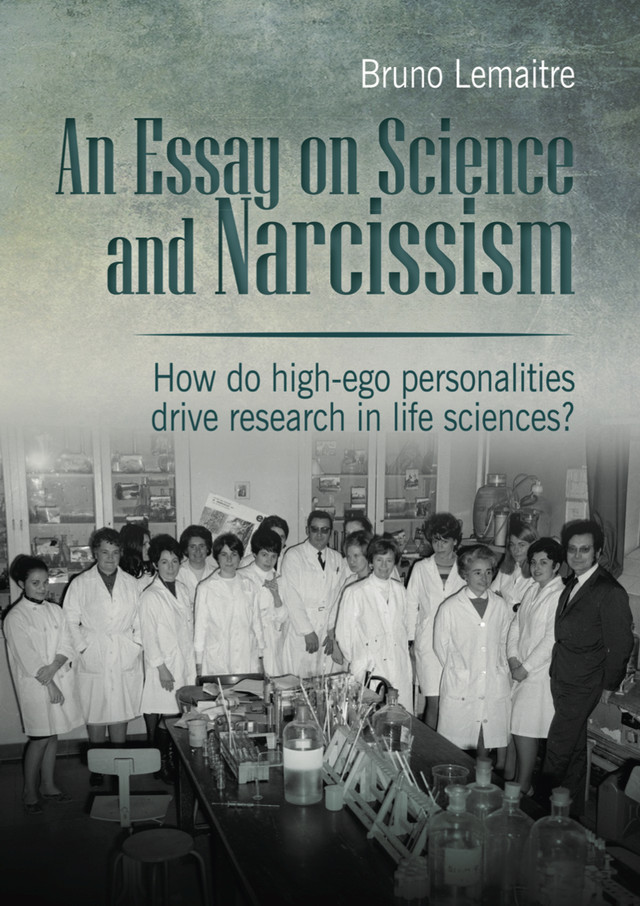
Bruno’s book “An essay on science and narcissism (how do high-ego personalities drive research?)” is available as a free download from EPFL Press (here) – highly recommended!
More of Bruno’s essays on narcissism, his personal account of the Nobel Prize-winning discovery of the role of Toll receptors in immunity and more can be found on his personal website here.
 Total Internal Reflection
Thank you for conducting and publishing this interview. It was a very thought-provoking and illuminating read.
LikeLiked by 1 person
Thank you so much for taking the time to write! Very happy that you found it interesting.
LikeLike